Pre-shipment leather quality control confirms that a consignment matches the customer’s approved specifications for leather type, colour, thickness, surface quality, performance, quantity and packaging. Visual inspection, relevant testing and a documented release decision work together; appearance alone cannot establish conformity.
This practical guide is intended for tanneries, wholesale buyers and quality teams. Test programmes and acceptance limits must reflect the end use, purchase agreement and destination-market requirements.
Each order needs a product specification covering article code, hide or skin type, tannage, colour, finish, thickness range, grade, area or piece count, required tests and packing instructions. An approved master sample and examples of acceptable and unacceptable variation reduce subjective decisions about colour, handle and texture.
Terms such as “export quality” or “Grade A” are insufficient without written criteria. A test-method standard does not necessarily establish a product acceptance limit. Record the measurement method and the pass/fail requirement separately.
Identify each lot by article, colour, production recipe, finishing batch and thickness range. Assess different production or shade lots separately. Samples must represent the shipment and must not be selected only from the best-looking pieces.
Inspection of every piece is a useful approach for surface quality, while destructive and chemical tests require a risk-based sampling plan. Sampling position, specimen orientation and conditioning affect results. Agree acceptance sampling and AQL in advance; AQL does not guarantee that every piece in an accepted shipment is defect-free.
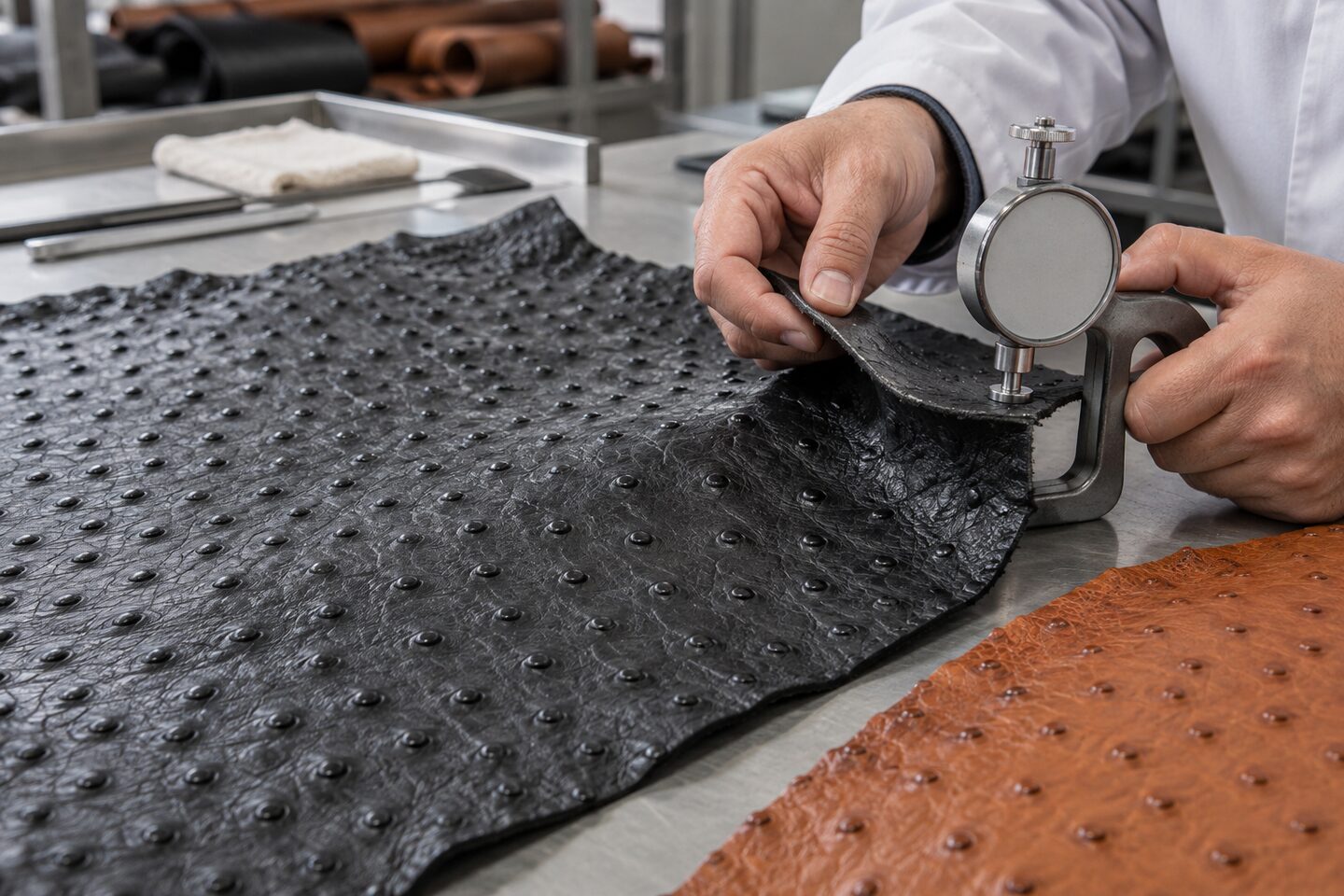
Compare leather with the approved master under controlled lighting. Record shade differences, stains, scratches, holes, tears, unacceptable creases, coating damage, uneven embossing and gloss variation. Natural markings must be assessed against the agreed grade and intended product; a natural characteristic is not automatically a rejection defect.
Check colour variation both within individual skins and between pieces. If a spectrophotometer is used, specify the colour-difference calculation and tolerance. Compare softness, fullness, flexibility and surface feel with the reference sample and intended use. Separate and label different shade groups before packing.
Use calibrated equipment to measure thickness at defined locations and record its variation. A single reading cannot represent an entire skin. Bags, footwear, garments and belts have different requirements, so one universal thickness limit is inappropriate.
Reconcile piece count, measured area, sales units and rounding conventions with the order and packing list. Total measured area is different from usable cutting area: the position and severity of defects can reduce the customer’s cutting yield.
| Property | Inspection objective | Example reference method |
|---|---|---|
| Thickness | Conformity with the ordered range | ISO 2589 |
| Tensile strength and elongation | Strength and deformation behaviour | ISO 3376 |
| Tear resistance | Resistance to tear propagation | ISO 3377-2 |
| Colour fastness to rubbing | Colour transfer under dry and wet conditions | ISO 11640 |
| Flex resistance | Leather and coating durability under repeated bending | Method appropriate to leather type and application |
Specify the exact method and edition, conditioning, sample count and acceptance limits. Do not directly compare results from different methods without establishing their comparability.
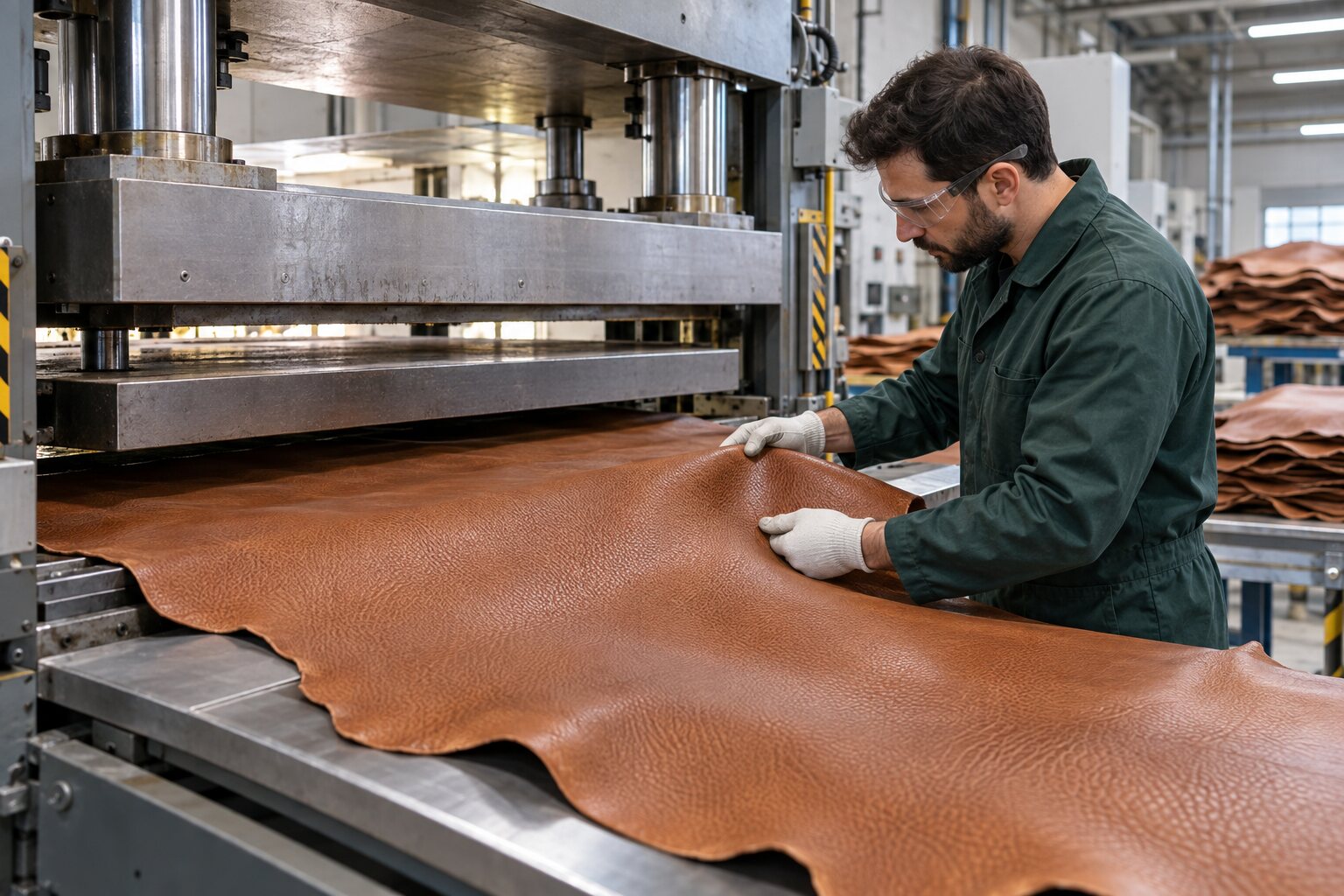
Build the chemical programme around tannage, chemical inputs, end use and the customer’s restricted substances list (RSL). Depending on the specification, it may include pH, extractable matter and dedicated tests for chromium(VI) or formaldehyde. Total chromium measurement does not replace a chromium(VI) test.
Automotive leather may also require organic-emission and fogging assessments. Check chemical acceptance criteria against current applicable destination requirements and the contract. Obtain critical test results before shipment release. This guide does not certify the legal compliance of any particular product.
Define critical, major and minor defects with clear examples. Incorrect product identity, active mould or failure of a critical requirement should place the affected lot on hold for quality review. Assess major and minor defects using the agreed acceptance plan.
Issue a nonconformity report and record whether affected leather will be sorted, reworked, regraded or rejected. Reinspect reworked material and repeat relevant tests where necessary. A passing result from one sample must not be extended to other lots without a valid sampling basis.
Before packing, check for mould, unsuitable moisture, unusual odour and contamination. Packaging should prevent creasing, concentrated pressure, colour transfer and surface damage. Packing damp leather or trapping moisture can increase the risk of transport damage.
Identify every package by order, article, colour, lot, quantity or area and a traceability reference. Reconcile the physical goods with the packing list and select storage and transport conditions suitable for the leather.
No. It must be supported by the measurements and tests required by the intended use and contract. Some performance or chemical issues cannot be identified visually.
No. End use, skin type, tannage, finish, customer specification and destination requirements determine acceptance criteria.
Order and lot identifiers, sampling method, results and limits, defects, corrective actions, packing status, final disposition, and the names and dates of responsible approvals.
When discussing an order with Dalir Leather, specify the intended application, thickness, colour, finish and quality criteria so that the order has a clear basis for review and agreement.
These links lead to the official ISO method summaries. Agree the applicable edition, sample conditioning and product acceptance limits with the laboratory and customer before ordering tests.
Effects of leather ironing and embossing presses; Leather printing and embossing samples; Discuss wholesale order specifications.
Prepared by: Dalir Leather Industry. This guide explains order inspection criteria; it does not state that all listed tests are performed in an in-house laboratory.