A leather ironing and embossing press uses pressure, temperature and dwell time during dry finishing to smooth or pattern the leather surface. The appropriate settings depend on the leather structure and finish. Higher pressure does not always improve quality and may reduce softness and thickness.
Prepared by: Dalir Leather Industry — About the company
Hydraulic leather ironing and embossing presses are among the most important machines in dry finishing. Used after tanning, dyeing and drying, they combine controlled pressure, temperature and dwell time to adjust surface appearance, gloss, grain consistency and leather handle. The goal is not merely to create an attractive pattern; it is to achieve the required surface while preserving softness, thickness and physical performance.
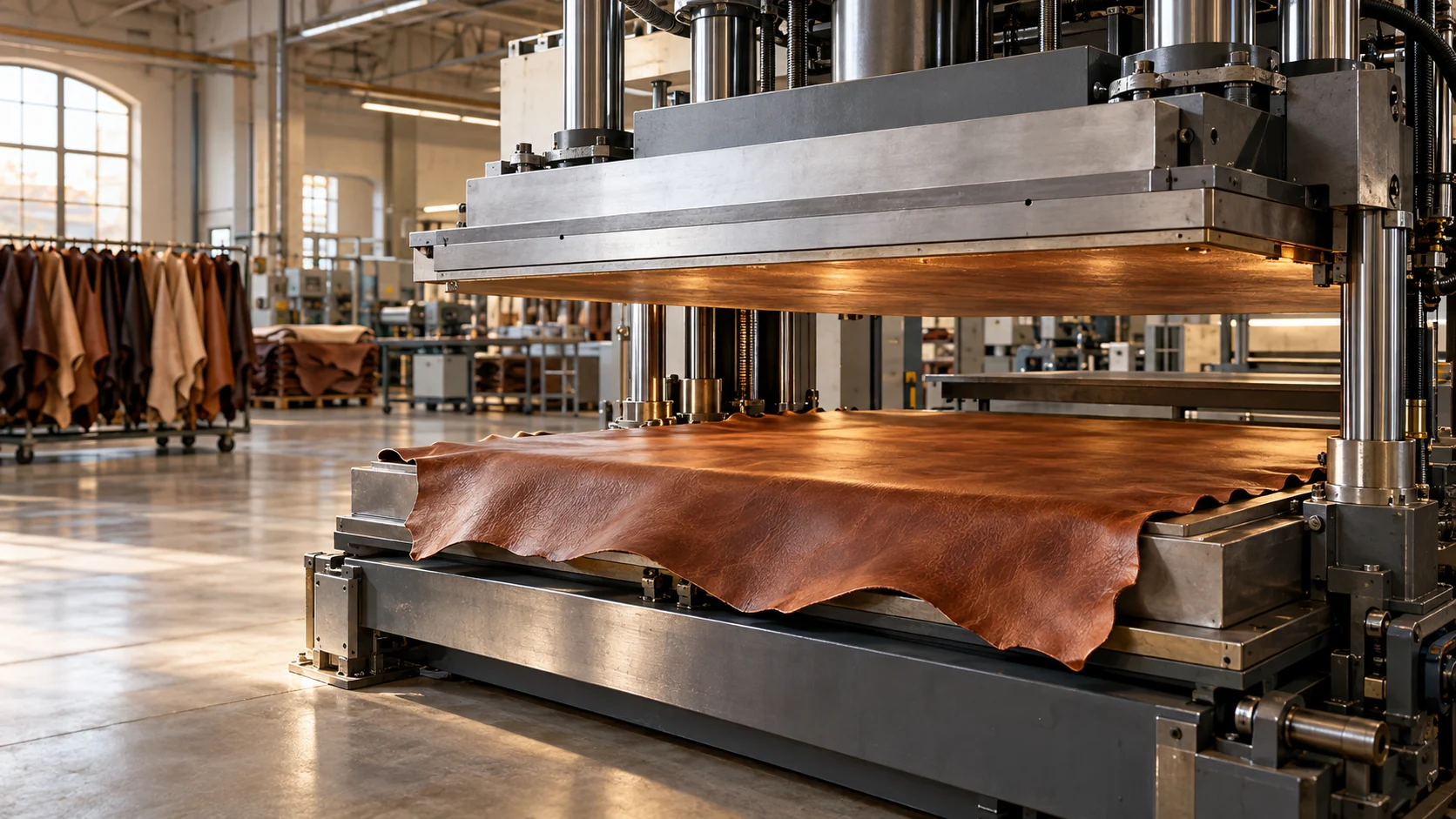
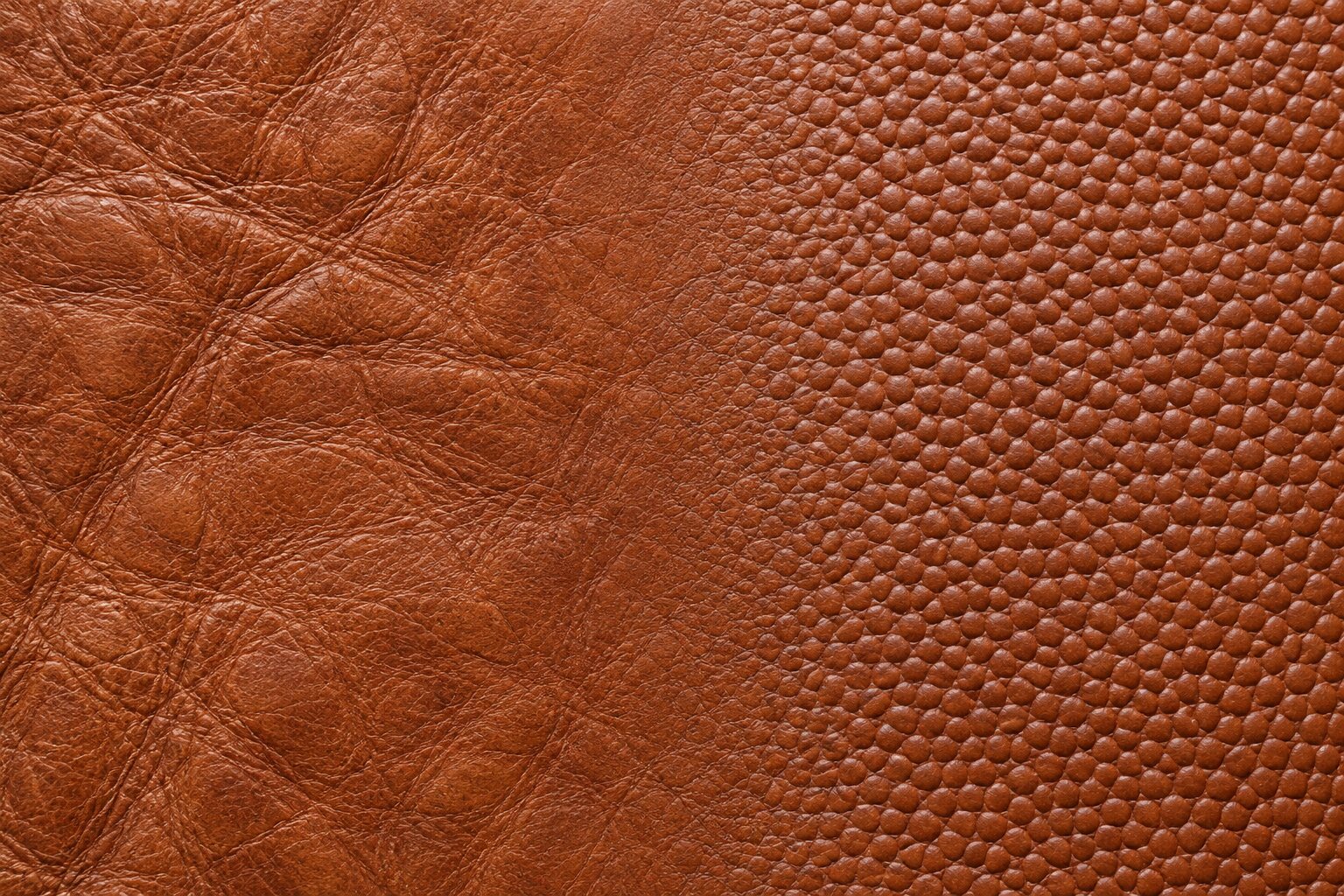
Ironing, plating and embossing belong to the dry-finishing stage, normally after wet processing, dyeing, drying and the application of finishing coats. Plating smooths the grain and helps consolidate the thermoplastic finish film. Embossing uses an engraved plate to transfer a controlled grain or decorative pattern.
Embossing can reduce visual variation and make hides from different areas look more consistent, but it does not replace structural quality. Loose fibre, poor substance, weak finish adhesion or cracking cannot be corrected simply by applying more pressure.
These variables interact. Increasing pressure, temperature and time together may produce a deeper grain, but it also raises the risk of thickness loss, a firmer handle, colour shift or finish damage. In practice, the best recipe is usually the lowest combination of pressure, temperature and dwell time that delivers the target appearance consistently.
Heat and pressure level surface irregularities and consolidate the finish film. Depending on the plate, finish formula and temperature, the result can range from a natural matte look to a smooth, high-gloss surface.
For footwear, bags, belts, upholstery and other industrial applications, batch-to-batch consistency is essential. Correct embossing makes it possible to reproduce a defined grain over a large area.
Excessive pressure compresses the fibre network, which may reduce thickness, fullness and softness. Soft nappa articles usually require light or “kiss” pressure, while corrected-grain leathers can often tolerate a stronger embossing action.
High temperature or long dwell time may darken pale shades and vegetable-tanned leather or cause a visible hue shift. Measuring colour difference (ΔE) before and after pressing is recommended for sensitive articles.
| Criterion | Flat hydraulic press | Rotary machine |
|---|---|---|
| Contact | Full plate at once | Continuous roller contact |
| Deep embossing | Better suited | More limited |
| Dwell control | Direct and precise | Linked to line speed and contact arc |
| Productivity | Batch work and special patterns | High-throughput continuous production |
| Typical use | Deep grain, engraved plates, high pressure | Fast ironing, soft and waxy articles |
Italian manufacturers such as Mostardini, Gozzini and Bergi focus on uniform load distribution, temperature stability, rigid machine frames, repeatable strokes and programmable control. Mostardini MP_TSX presses are available in a broad range of capacities and may include PLC control, multi-zone heating, repeated strokes and light “kiss” effects. Gozzini highlights frame rigidity and uniform pressure and temperature, while Bergi rotary systems such as Starlux and Supervario-T are intended for continuous throughput and demanding soft or waxed articles.
Tonnage alone is not a sufficient purchasing criterion. Plate dimensions, actual contact area, load uniformity, thermal recovery, plate-changing time, control accuracy and technical service all influence both quality and production cost.
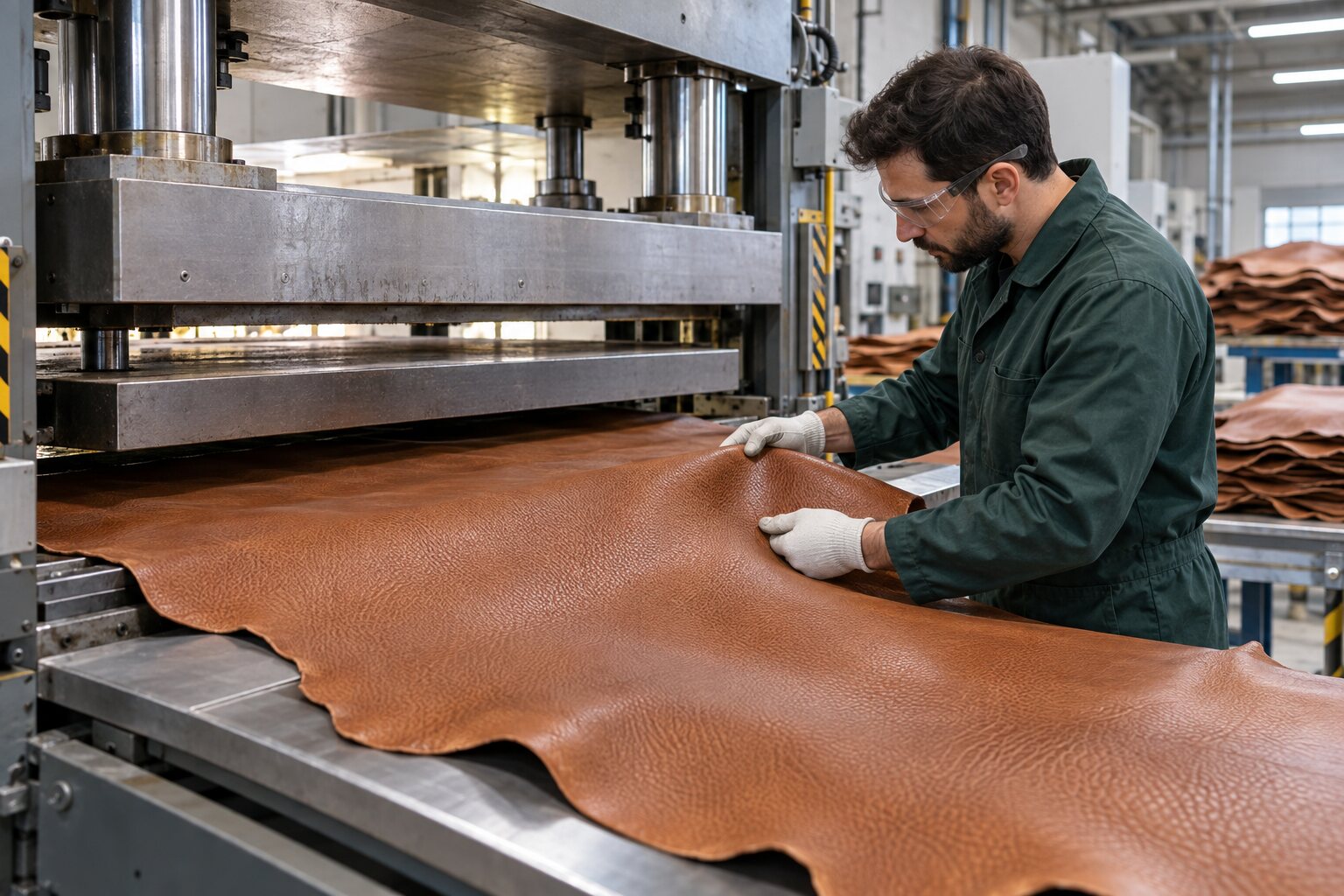
Every article should have a documented press recipe: leather code, tanning type, moisture, thickness, finish system, plate number, pressure, temperature, dwell time, number of strokes and QC results. This reduces dependence on undocumented operator experience and improves reproducibility.
A hydraulic ironing and embossing press is a tool for final control of leather appearance and surface performance. Professional results come from matching pressure, temperature and time to the leather structure and finish chemistry. The objective is not maximum grain depth or gloss, but the desired appearance with minimum loss of softness, thickness, colour stability and durability.
It can reduce visual irregularity, but it cannot repair weak structure, loose fibre, tears or poor finish adhesion.
No. Excess pressure may reduce thickness and softness without delivering a meaningful improvement in pattern quality.
Heat changes the behaviour of dyes, oils and waxes. High temperatures, long dwell times and pale shades increase the risk.
Light pressure, short dwell and controlled temperature, validated through a small production trial.
Besides tonnage, evaluate pressure and temperature uniformity, plate dimensions, control precision, technical service and suitability for your product mix.
For technical discussion, leather selection and wholesale enquiries, contact Dalir Leather Industry.
For machine specifications, PLC control and multi-zone heating, consult the official Mostardini MP_TSX page and manufacturer technical brochure. Check the specific machine model and validate process settings for the leather being finished.
For patterns and service enquiries, see Dalir Leather printing and embossing samples.