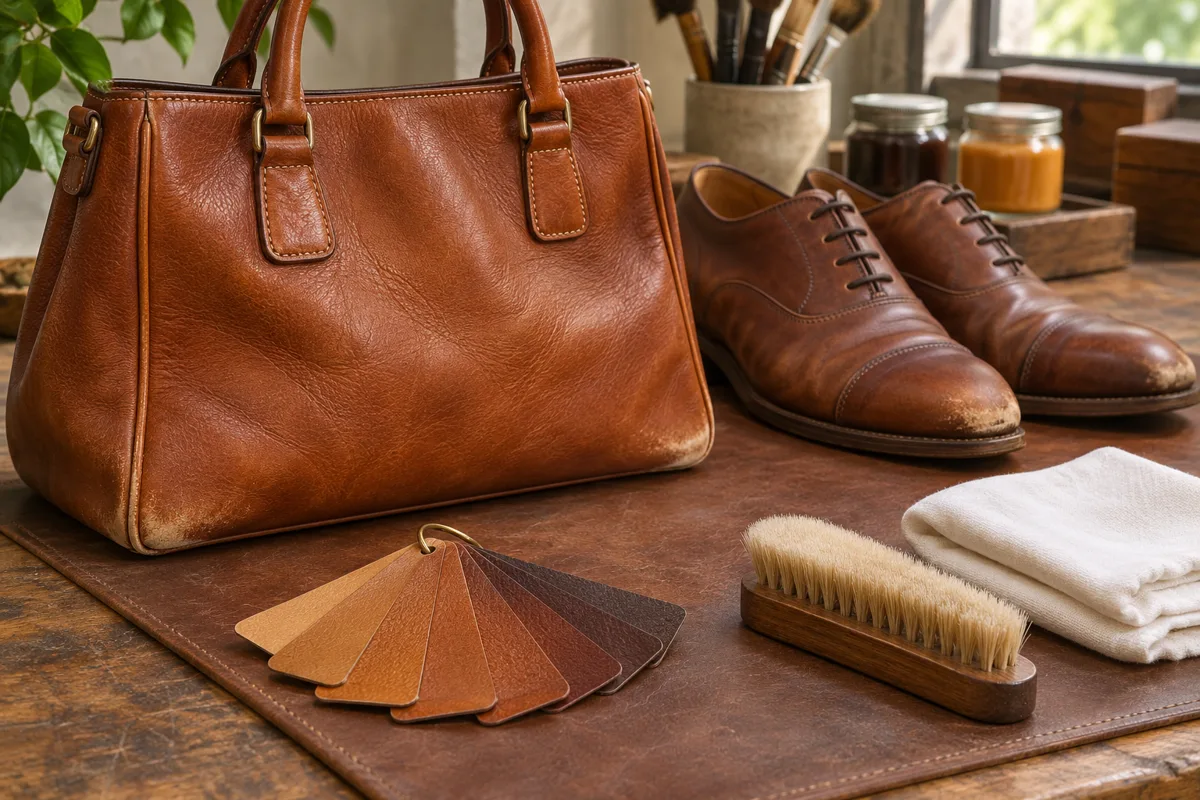
Short answer: Natural leather can lose colour because dyes fade, water or sweat moves soluble substances, or friction wears away the protective finish. Many items can be recoloured, but a lasting repair depends on identifying the leather and the damaged layer. Oil alone does not restore lost dye, and the wrong cleaner or coating can make the damage permanent.
A pale handbag corner, a shoe that stains your socks and a jacket faded by sunlight are three different problems. They should not receive the same treatment. This guide explains what changes inside leather, how professionals diagnose the cause and when a home repair should stop.
Leather is a three-dimensional collagen fibre network stabilised by tanning. Retanning, dyeing and fatliquoring then influence its colour, softness and behaviour. Some leathers also receive surface layers containing primer, pigments, acrylic or polyurethane binders and a protective topcoat.
A dye is soluble and colours the fibre structure. A pigment consists of insoluble particles held in a binder. The binder and topcoat contribute to adhesion, flexibility and resistance to rubbing. A repair must therefore address the right layer rather than simply conceal the pale area.
For background, read our guide to natural leather and leather industry glossary.
Bag straps, cuffs, shoe edges and seats receive repeated friction. This may first change the topcoat gloss and then remove pigment and binder. Dye transfer to a white cloth is different from a coating peeling away; the distinction matters when choosing a repair.
Water can redistribute poorly fixed dyes and soluble salts, producing rings or changes in shade. Repeated swelling and drying also stresses the finish. A pale salt deposit is not necessarily loss of the original colour. Water-spot resistance and colour fastness to water are separate properties.
Light, particularly ultraviolet radiation, can alter dye molecules, tanning components and fats. The result may be fading, yellowing or dullness. Recolouring an item without reducing its exposure leaves the cause in place.
Moisture, salts and other substances in sweat can encourage colour migration and staining. Skin oils and creams may darken or polish the surface. A change in reflected light can look like a colour defect even when dye has not disappeared.
Household alcohol, acetone, bleach and alkaline detergents can damage dyes or surface polymers. Professional preparation products may contain solvents, but that does not make an uncontrolled household solvent treatment suitable.
Polymer degradation, flex cracking and weak adhesion between layers can lead to flaking. Powdery, brittle leather may have structural deterioration. Adding colour or a fresh topcoat over an unstable base does not restore its strength.
Start with photographs under consistent light, the care label and information from the manufacturer. A restorer may examine the surface under magnification and test a hidden area. Do not use a water-drop test indiscriminately: it can itself stain sensitive aniline leather.
| Visible sign | Possible explanation | First response |
|---|---|---|
| Dull surface without flaking | Soiling or changed topcoat gloss | Compatible gentle cleaning, then reassessment |
| Pale worn edge | Local finish abrasion | Assess pigment, binder and topcoat repair |
| Ring after wetting | Migration of soluble substances | Specialist cleaning assessment before recolouring |
| Colour transfers during rubbing | Insufficient rubbing fastness or mobile dye | Investigate fixation and finish performance |
| Flakes, cracks or powder | Unstable coating or substrate | Professional assessment; do not coat over it |
These are diagnostic clues, not proof of a single cause.
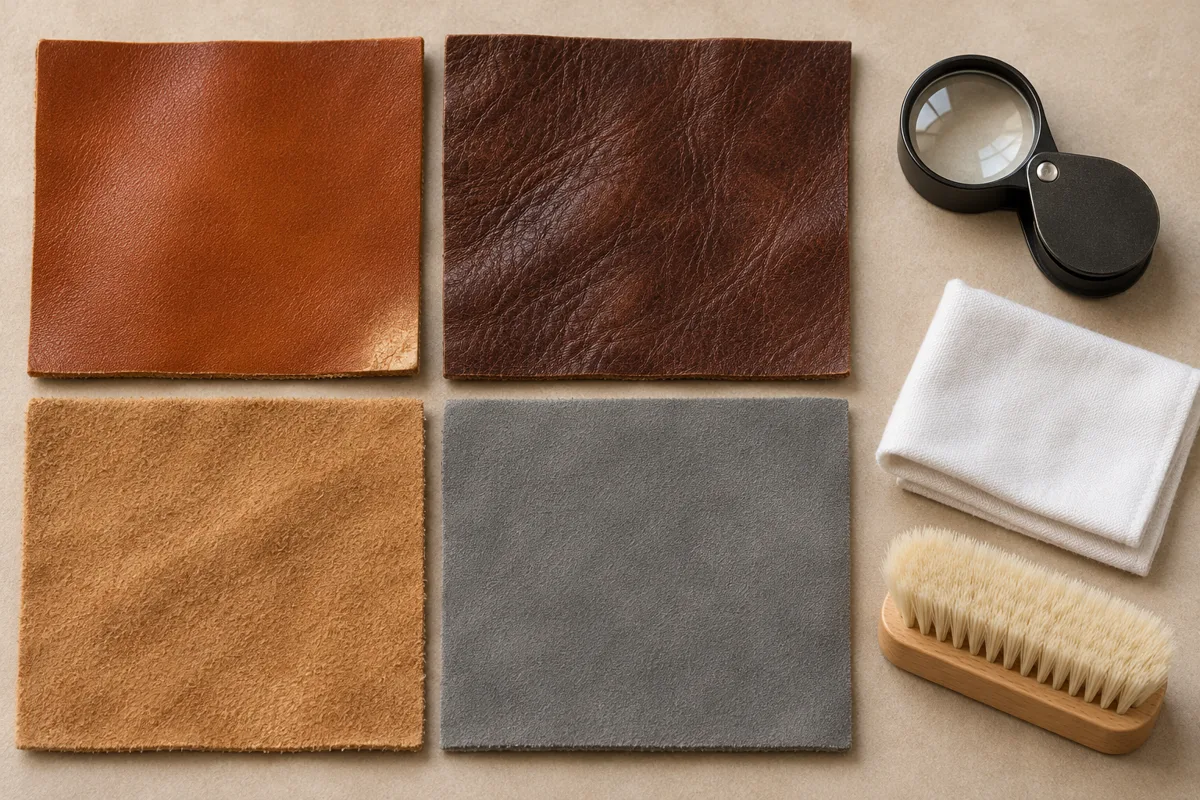
The usual sequence is assessment, compatible cleaning and controlled removal of unstable finish. Deep scratches may need a flexible leather filler. A compatible primer or adhesion promoter may be required, followed by several very thin applications of pigment and binder. A matching topcoat restores the intended gloss and protection. Drying and curing must follow the chemical supplier’s technical instructions.
Too much coating can hide the grain and crack during flexing. Pigment without enough binder, or colour applied over silicone and grease, may look satisfactory initially and fail quickly.
Aniline repair may require transparent toning or a compatible penetrating dye applied by a specialist. Opaque pigment can permanently change its character. Semi-aniline leather requires a decision between correcting the underlying shade and rebuilding a very thin surface finish. Jackets need particular attention to softness and flex resistance.
Use finish-specific cleaning and gentle nap restoration. A suitable suede or nubuck colour spray may be applied in a controlled mist after testing. Ordinary heavy wax, oil or film-forming leather paint can destroy the nap. Significant water marks and delicate items belong with a specialist.
Structural stability comes before appearance. Brittle or powdering leather may require conservation assessment rather than routine recolouring. Museum conservation procedures should not be copied directly into everyday bag or shoe repair.
Avoid olive oil, cooking oils, petroleum jelly, household solvents and unidentified fabric dyes. Temporary darkening after oiling is not evidence that lost dye has returned. Do not dry wet leather with a hairdryer, heater or iron.
There is no universal lifespan for a colour repair. Durability depends on the leather, substrate, chemical system, film thickness, curing and use. Check colour and gloss matching, dry and wet rubbing, flexing and adhesion where applicable. A repair that stains clothing after curing is not satisfactory simply because it looked good on day one.
Relevant laboratory methods include ISO 11640 for repeated rubbing, ISO 11641 for perspiration, ISO 11642 for water, ISO 15700 for water spotting and ISO 5402-1 for flex resistance. ISO 11644 addresses finish adhesion on applicable continuously coated leathers; it is not a universal test for suede, nubuck or uncoated aniline. These methods do not establish one pass limit for every product: agree requirements for the intended use.
Select dyes and finishes for the final application. Control pH, dye distribution and fixation; coordinate retanning and fatliquoring; prepare the crust surface cleanly; and balance binder flexibility with topcoat resistance. Record batch tests, retain reference samples and investigate returns systematically. Our pre-shipment leather quality checklist explains the wider inspection process.
No. Wear, sunlight and unsuitable care can affect good leather too. Premature colour transfer or peeling may, however, indicate inadequate dye fixation or finish performance and deserves investigation.
No. Many sound leathers can be recoloured, but uniformity and durability are not guaranteed. Severe structural damage and sensitive aniline finishes limit what can be achieved.
A compatible conditioner may alter appearance and handling, but it does not reconstruct destroyed dye molecules or replace a missing pigment-and-binder layer.
For widespread peeling, a faded jacket, delicate suede, large aniline water marks, powdering leather or a valuable item. Ask what finish system will be used and how rubbing, flexibility and adhesion will be checked.
Prepared by Dalir Leather Industry from the supplied technical research report on leather colour loss. This is educational material, not a guarantee for a specific item or a claim that Dalir provides consumer restoration services.