Short answer: A Black Friday leather deal is worthwhile when the final price really is lower for the same item, the material suits its intended use, and the return terms are clear. A large percentage on a tag proves neither dishonesty nor good value.
Black Friday 2026 falls on Friday, 27 November. Before buying a leather bag, leather shoes or a leather jacket, ask three questions: What is the genuine reference price? What material am I actually buying? Is the product built for the way I will use it?
Adapted from the research PDF, this guide takes a tannery and manufacturing perspective. Dalir Leather Industry produces natural leather; this article does not announce a Black Friday sale of finished Dalir bags, shoes or jackets. The original AI-generated illustrations are educational scenes, not photographs of the factory’s products or evidence of material authenticity.
Clearance stock, a change of season, discontinued designs and cash-flow needs can all produce genuine discounts. However, a comparison against an inflated reference price can exaggerate the saving. Judge the same product and its price history rather than assuming that a particular retailer is misleading customers.
Imagine a bag normally offered at €200, then advertised with a €400 reference price and a €160 sale price. The promotion may say “60% off”, but the reduction from the earlier €200 price is 20%. This is an illustrative calculation, not a claim about a real seller. Compare delivery charges and purchase terms as well.
For EU retailers, the official Your Europe pricing guidance explains that an announced reduction generally refers to the lowest price charged during at least the preceding 30 days. Exceptions and national implementation matter. Do not treat this as a universal rule for every country.
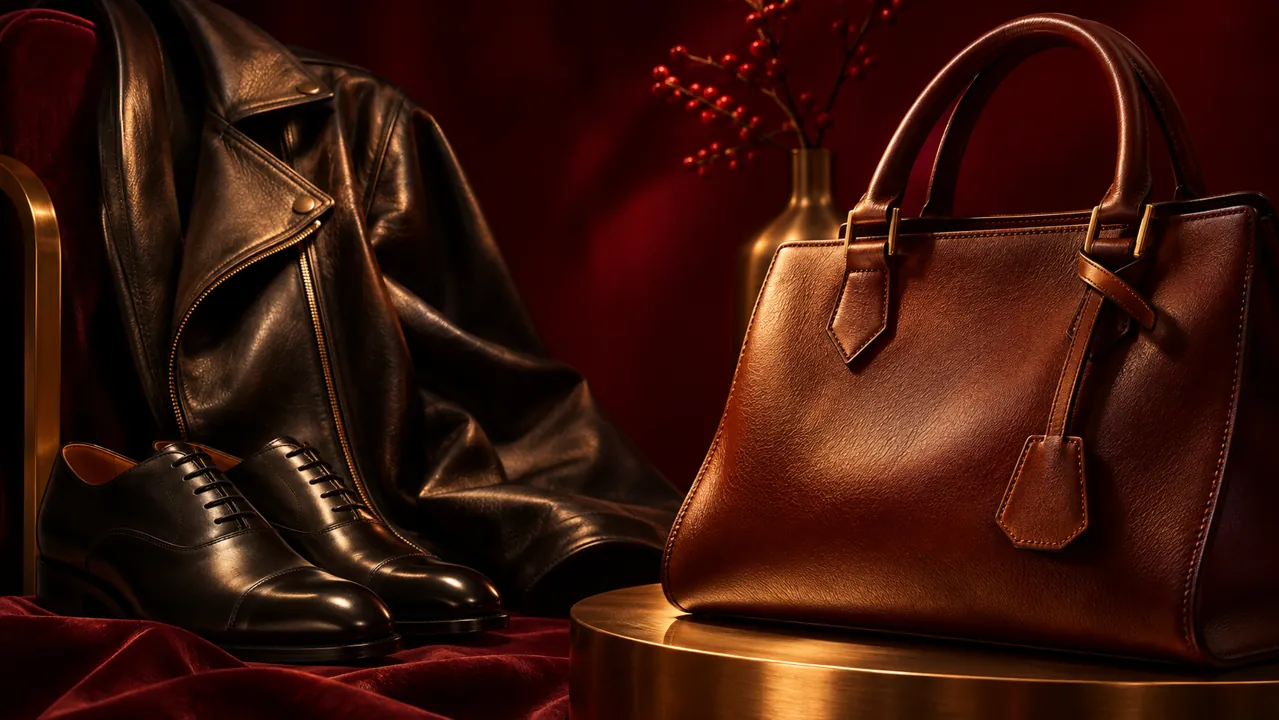
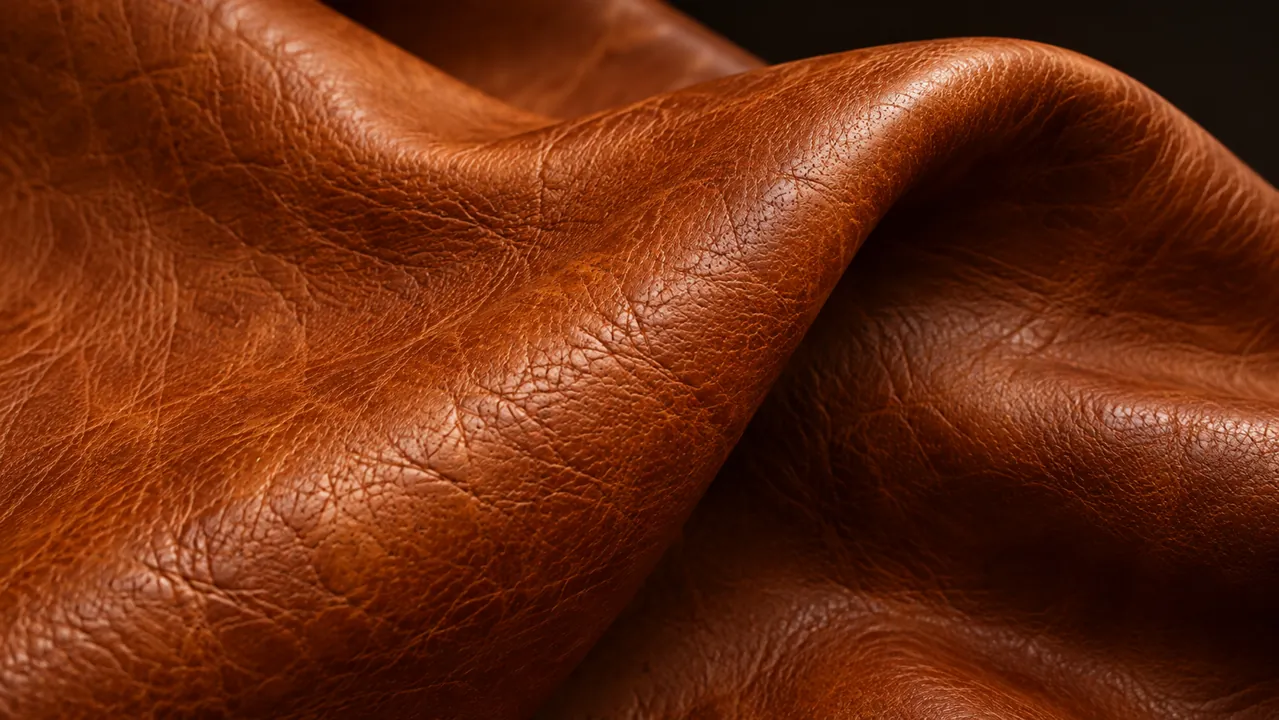
Natural leather comes from the fibrous structure of an animal hide or skin. Species, hide region, raw-material condition, tanning, retanning, fatliquoring, drying and finishing influence its behaviour. Two products described as natural leather can therefore differ substantially in feel, flexibility and surface performance.
The finished article also depends on stitching, lining, adhesives, hardware and zips; footwear adds sole construction and attachment. A premium material cannot compensate for every design or assembly defect. Our leather industry glossary explains the manufacturing terms.
| Material term | What it describes | What to ask |
|---|---|---|
| Full-grain leather | The natural grain surface is retained. | Which finish and intended application? |
| Corrected-grain leather | The surface is modified for consistency and may be finished or embossed. | How does the finish perform in everyday flexing and wear? |
| Tanned split leather | A lower layer separated from the hide; it may have a coating. | What are the thickness, coating and intended use? |
| Bonded or reconstituted material | Leather fibres or particles combined with binders; not an intact hide structure. | What is the exact composition and construction? |
| PU or PVC imitation leather | Typically a polymer coating on a textile support, rather than natural leather. | Which backing, coating and care requirements? |
“Genuine leather” is not a fixed, universal quality grade. Full-grain is not automatically the best specification for every application. A well-designed corrected-grain finish may better meet a requirement for uniform appearance and easier care. Tanned split leather should not be confused with bonded material. See the Leather Naturally terminology guide for further distinctions.
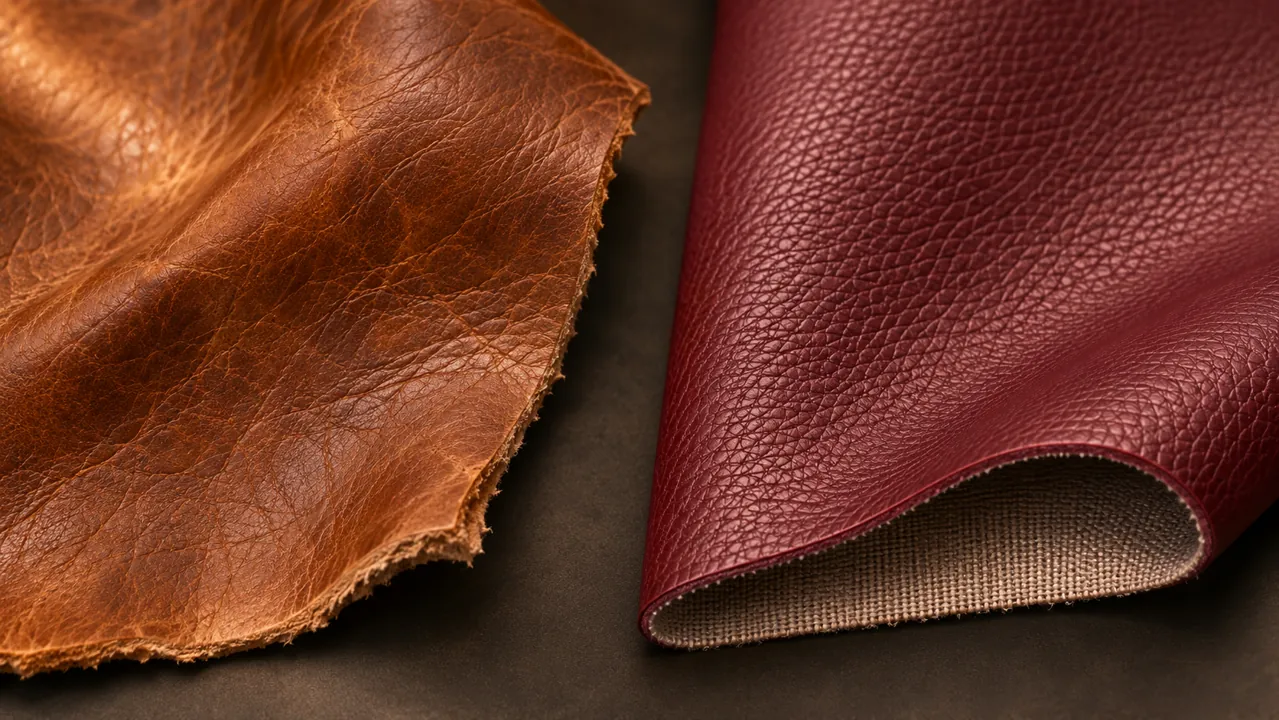
Gentle creasing where leather bends does not necessarily indicate damage. An opening crack, a separating finish or unusual colour transfer warrants closer examination. Peeling is not exclusive to synthetic materials: poor finish adhesion can also affect natural leather. A photograph cannot establish the precise cause.
Professional assessment can use ISO 11640:2018 for rubbing colour fastness, ISO 5402-1:2022 for flex resistance, and ISO 11644:2022 for finish adhesion within each method’s scope. Mentioning these methods does not mean that an illustrated product has been tested or certified.
Smell, touch and a water drop cannot independently prove authenticity. Do not burn, scratch or soak a shop item. Request written material information, an agreed reference sample and, for industrial procurement, a relevant test report.
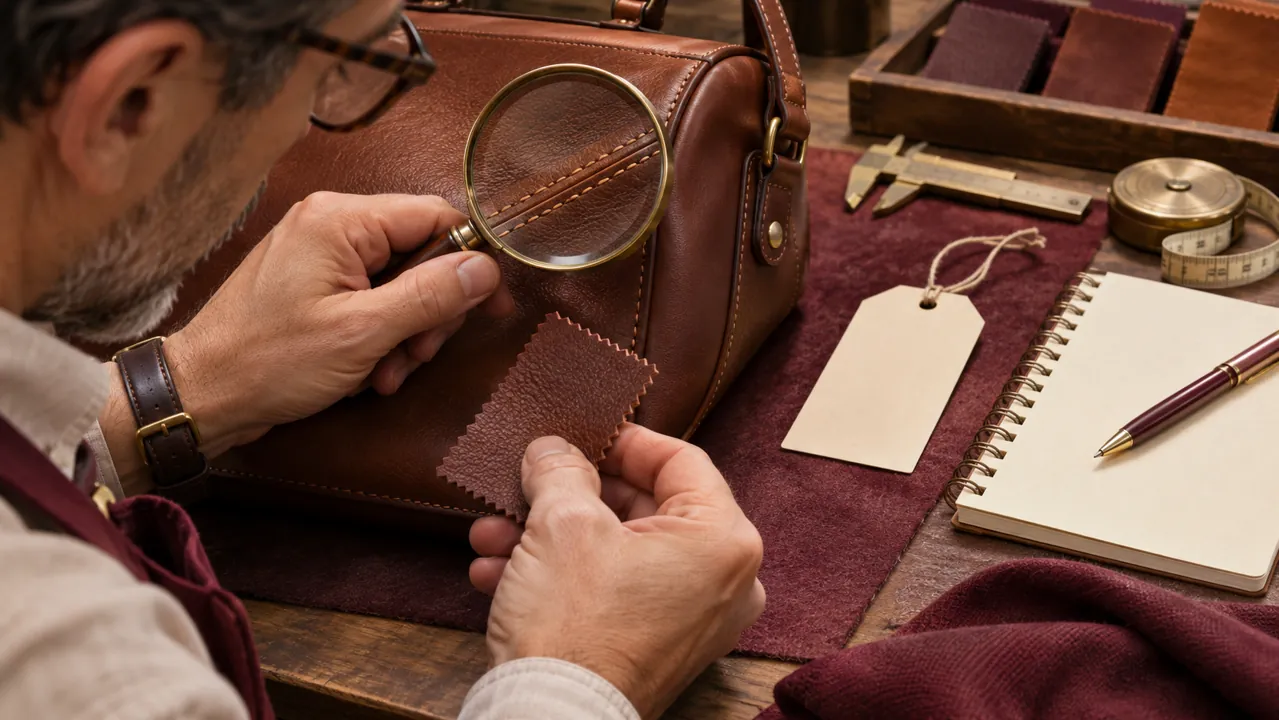
Compare the purchase price alongside likely care, repair and actual use. No material label guarantees a particular number of years. Even a heavily discounted item is poor value if it does not fit or will not be used.
Friday, 27 November 2026. Each retailer may set a different promotional period.
No. Check the price history, the exact specification and the selling terms.
No. Processing, finish, product construction, use and care all matter.
No. Match the leather specification to the required application and performance.
No. Neither is conclusive on its own, and surface treatments can change the result.
The material of each component, leather type and finish, care instructions, final price and return policy.
Good value starts with a real price comparison, a clear material specification and performance suited to the job. Manufacturers looking to discuss natural leather specifications and samples can contact Dalir Leather Industry. This is an invitation to discuss production requirements, not a Black Friday sale promise.
Sources: the research PDF supplied for this article; official ISO and Your Europe references and the Leather Naturally guide linked above. Date reference: Time and Date. Editorial review: 21 November 2026. Price examples are hypothetical; no final 2026 Black Friday sales figures are claimed.