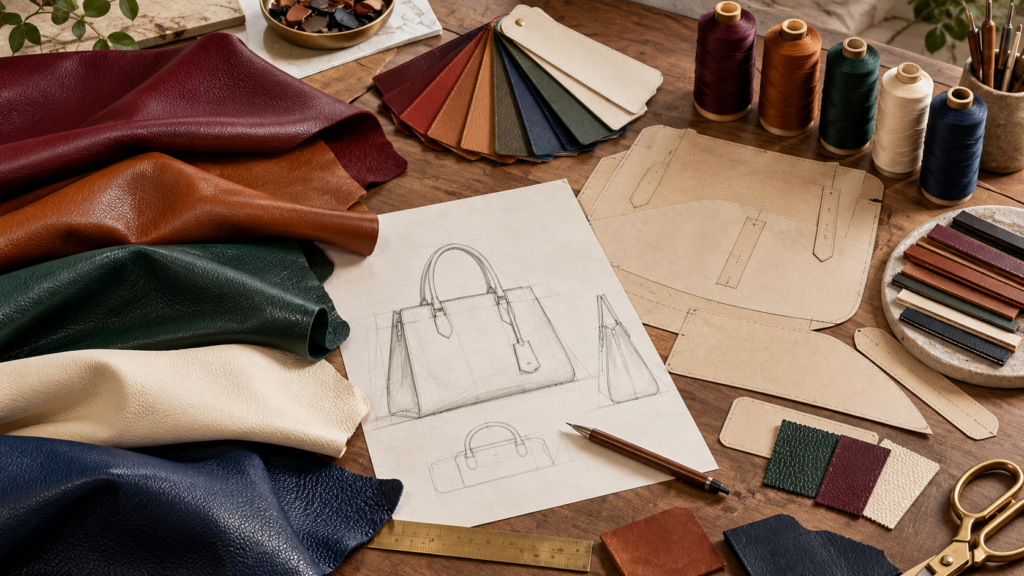
Who chooses the colours and designs of leather goods? Usually, no single person does. Designers propose the visual direction; merchandising weighs the market and price; product development and the tannery establish feasibility; quality teams assess acceptance. Customer purchases then influence repeat orders and future collections.
A burgundy bag or a textured leather shoe is the visible end of a selection process. Other shades and shapes may have been revised or removed before the product reached a store. Behind the scenes lies a negotiation between appearance, commercial demand and manufacturing capability. This article interprets public sources; it does not claim access to a brand’s confidential approval process.
Design teams explore silhouette, proportion, colour families and the intended feel of a collection. Brand archives, product function and creative direction can all inform the brief. Yet a drawing is not a finished product: thickness, temper, seams, reinforcement and hardware may change the original shape.
Hermès describes creative freedom through the connected development of shapes, colours and materials. It is a useful example of their relationship, rather than evidence that every brand uses the same workflow.
Collection merchandising connects creative proposals with a saleable assortment. It considers product range, price, inventory and order depth. A striking colour might suit a collection presentation without being selected for every store or for high-volume production.
LVMH’s description of merchandising roles connects product mix and volume potential with markets, customers and brand identity. What reaches a shop is therefore a commercial selection, not necessarily everything that was designed.
A phone image is not a complete leather colour specification. Hide type, absorption, grain, opacity, gloss and finish affect appearance. Burgundy on smooth glossy leather can look different from burgundy on matte milled leather, even when the starting reference is shared.
A professional brief should identify the leather article, finish, thickness, softness and end use alongside the colour reference. Review an actual sample on the intended material. See Dalir’s leather printing and embossing options for examples of surface patterns.

No. A code helps communicate a target; it does not guarantee the result on leather. Pantone’s FHI coating and pigment references include TPG formats, which are references rather than the finished hide. Its coatings and pigments guide explains this application.
Our practical recommendation is to keep an approved physical master labelled with the article, date and reference code. Agree on assessment lighting and acceptable shade variation. Photographs, HEX and RGB values can start a discussion, but should not replace an agreed physical approval sample.
Visual appeal and fitness for use are different decisions. Depending on the application, dry and wet rubbing fastness, finish flexibility or other surface performance may matter. Test methods and acceptance limits belong in the purchase specification; one universal pass value cannot cover every leather and product.
A visually accepted shade may need reformulation because it transfers colour or varies between batches. Approval of a small laboratory sample does not by itself prove that full production will be consistent. A pilot batch can help reveal risks before a sensitive order is released.
Trends provide creative signals, but popularity alone does not make a colour suitable for every customer or product. Brand identity, price, season, manufacturability and actual sales also matter. Customers choose within the offered range, while purchases, returns and repeat orders can influence what a brand develops next. The relationship runs in both directions.
State the end use, leather type, thickness, softness, colour reference, finish and gloss, grain or embossing, quantity and required timing. Review thread, lining and edge paint with the leather: separately approved components may still look wrong together.
Record the final physical master, colour comparison conditions, test requirements, acceptance limits, shade grouping and repeat-order expectations. Agree on a process for handling discrepancies. These are suggested purchasing controls, not a claim about any named brand’s internal procedures.
Design, merchandising, product development, the leather supplier and quality teams commonly contribute. Their authority differs between companies.
Absorption, grain, coating and gloss differ. Assess the shade on the intended leather and finish before approval.
A photograph is useful for an initial brief. Production approval should rely on an agreed physical sample and assessment conditions.
No. It still needs to fit the application, customer, price, brand and manufacturing requirements.
A professional choice becomes useful when taste is translated into verifiable specifications. To discuss material and finish options with Dalir Leather Industry, prepare a reference sample and product brief, then use the contact page to ask about order feasibility. Mention of other brands does not imply a partnership or endorsement.
Primary sources are linked in the relevant sections: Hermès on creative freedom, LVMH on merchandising, and Pantone on coating and pigment colour systems. The purchasing checklist and operational conclusions are editorial recommendations, not factory test reports or certification claims.