Choosing the right natural leather thickness is one of the most important decisions in manufacturing bags, footwear, belts and leather straps. Leather that is too thin may lack structure and durability, while leather that is too thick can be difficult to fold, stitch and edge-finish. This guide provides practical starting ranges in millimeters and ounces for sampling and wholesale specifications.
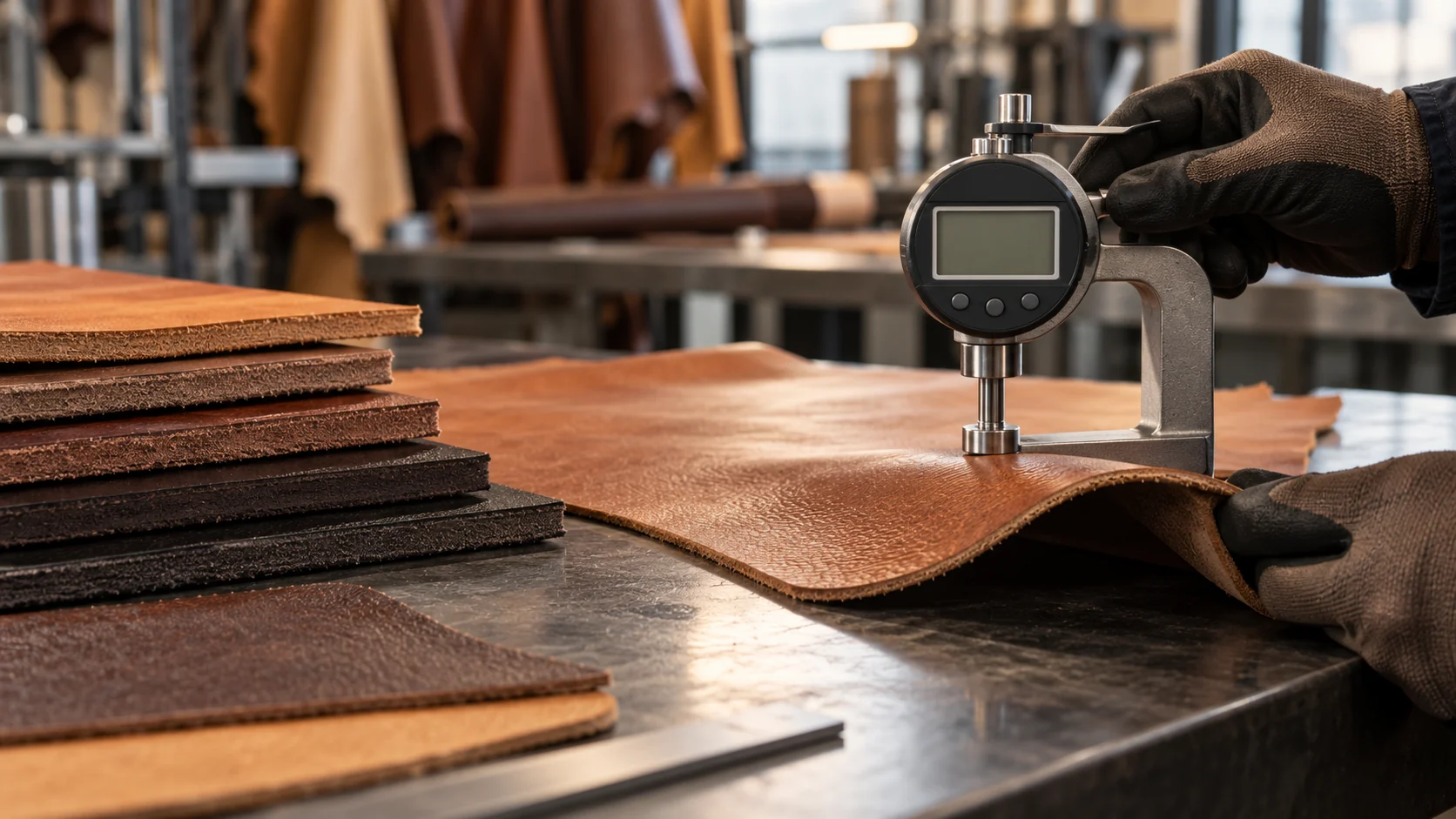
Two leathers with the same measured thickness can behave very differently. Hide type, tanning method, temper, fibre density, finish, reinforcement and lining all affect stiffness, drape and sewability. A useful specification therefore combines thickness with temper, tannage and final application.
| Approx. thickness | Leather weight | Typical use |
|---|---|---|
| 0.6 mm | 1.5 oz | Linings and fine components |
| 0.8 mm | 2 oz | Card holders and bag linings |
| 1.0 mm | 2.5 oz | Wallets and light footwear |
| 1.2 mm | 3 oz | Light bag bodies and shoe uppers |
| 1.6 mm | 4 oz | Structured bags and durable components |
| 2.0 mm | 5 oz | Handles, straps and heavy footwear |
| 2.4 mm | 6 oz | Strong straps |
| 3.2 mm | 8 oz | Belts |
| 3.6 mm | 9 oz | Heavy belts and structural pieces |
Note: one ounce of leather is approximately 0.4 mm, but ounce-to-millimeter conversion is only an estimate. Actual measurement is essential for industrial orders.
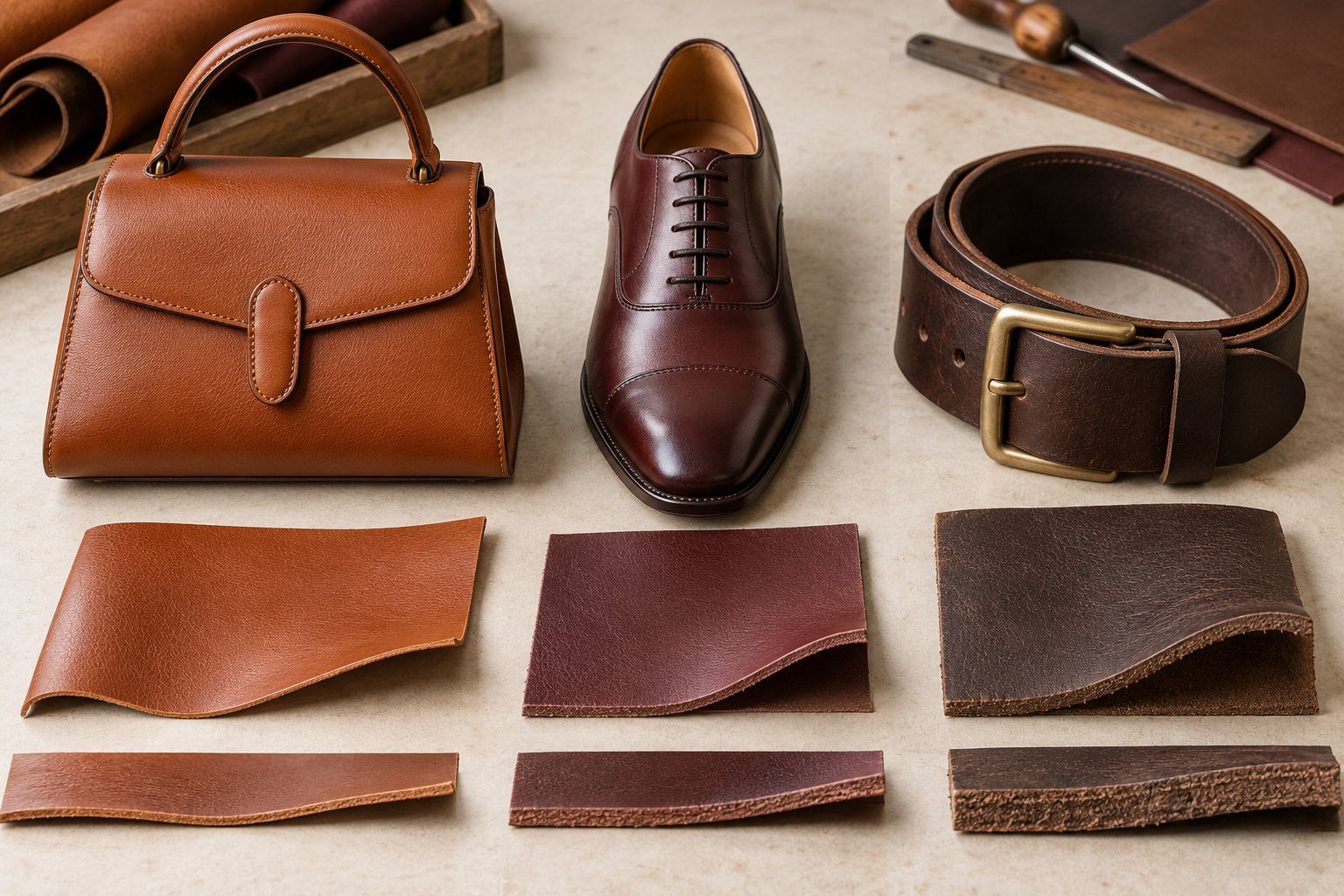
| Product or component | Starting range | Technical note |
|---|---|---|
| Pockets, card slots and linings | 0.6–1.0 mm | Reduces bulk and stiff folds |
| Light bag lining | 0.6–0.8 mm | Soft and even without ridges |
| Bag body panels | 1.0–1.4 mm | For soft and semi-structured bags |
| Structured handbags | 1.4–1.8 mm | Depends on temper and reinforcement |
| Handles and straps | 1.8–2.4 mm | For load resistance; avoid weak belly areas in critical straps |
| Dress shoe uppers | 1.0–1.4 mm | Balances formability and durability |
| Heavy shoes and boots | 1.8–2.2 mm | Depends on construction and lining |
| Leather belts | 3.2–3.6 mm | May be single-layer or laminated |
| Harness and structural parts | 4–5+ mm | Requires dense material and stretch control |
These values are starting points, not fixed rules. A production sample should be made and tested before bulk manufacturing.
Its large area, fibre density and wide thickness range make cowhide a common choice for bags, footwear, belts and straps. For load-bearing parts, cutting direction and hide zone should also be specified.
These are generally lighter and softer, making them suitable for linings, light bags, garments and fine components. Thin substance should always be evaluated together with tensile and tear performance.
Thickness is only one quality factor. Quill pattern, colour uniformity, usable area and fibre structure are also important. Wholesale orders should include a colour reference sample and an acceptable thickness tolerance.
Professional control uses a suitable thickness gauge and a method such as ISO 2589. Because leather is a natural material, readings should be taken at multiple points in the usable area, with the average, minimum, maximum and tolerance recorded. One reading is not enough to accept a bulk lot.
Instead of ordering only “1.6 mm leather,” specify the animal type, tannage, finish, temper, target substance, acceptable tolerance, colour, usable area, permitted cutting zones, required tests and order quantity.
Example: bovine full-grain leather, vegetable tanned, firm temper; target substance 1.6 mm; acceptable range 1.45–1.75 mm; measured according to ISO 2589; body panels only; belly excluded from critical straps.
For many bag bodies, 1.0–1.4 mm is a practical starting range. Structured handbags often need 1.4–1.8 mm or additional reinforcement.
Dress shoe uppers commonly start around 1.0–1.4 mm, while heavy footwear and boots often use approximately 1.8–2.2 mm.
For a single-layer belt, 3.2–3.6 mm is a common starting range. A laminated belt may combine two thinner layers.
No. The conversion is approximate, and natural variation makes multi-point measurement necessary.
Yes. The safest approach is to obtain a sample close to the target specification and test it in the actual product construction before approving bulk production.
Contact Dalir Leather for thickness selection, samples and wholesale pricing.