
Short answer: smell alone cannot prove that leather is genuine or safe. A mild natural scent may be part of leather’s character, while sharp chemical, rancid-oil or musty odors deserve investigation.
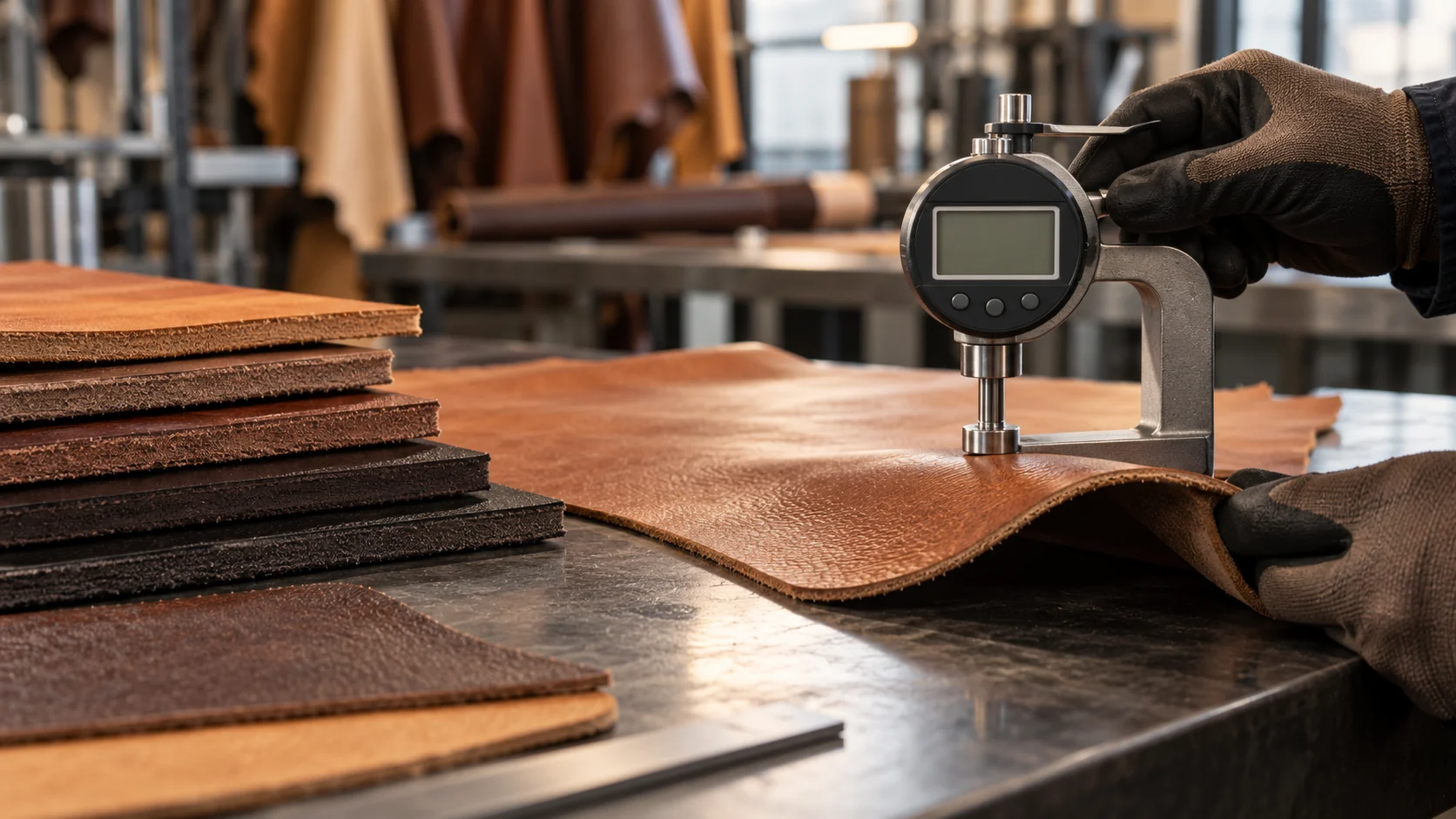
“Leather smell” is not one molecule. It is a mixture of volatile organic compounds (VOCs) originating from the hide, preservation, tanning agents, dyes, fatliquors, finishes, adhesives, packaging, heat and humidity. Two genuine leathers of comparable quality can therefore smell very different.
Professional investigations use gas chromatography–mass spectrometry (GC‑MS) and sometimes GC‑olfactometry. These methods separate volatile compounds and help identify odor-active aldehydes, organic acids, lactones and phenolics. The human nose is useful for screening, but a reliable conclusion requires testing.
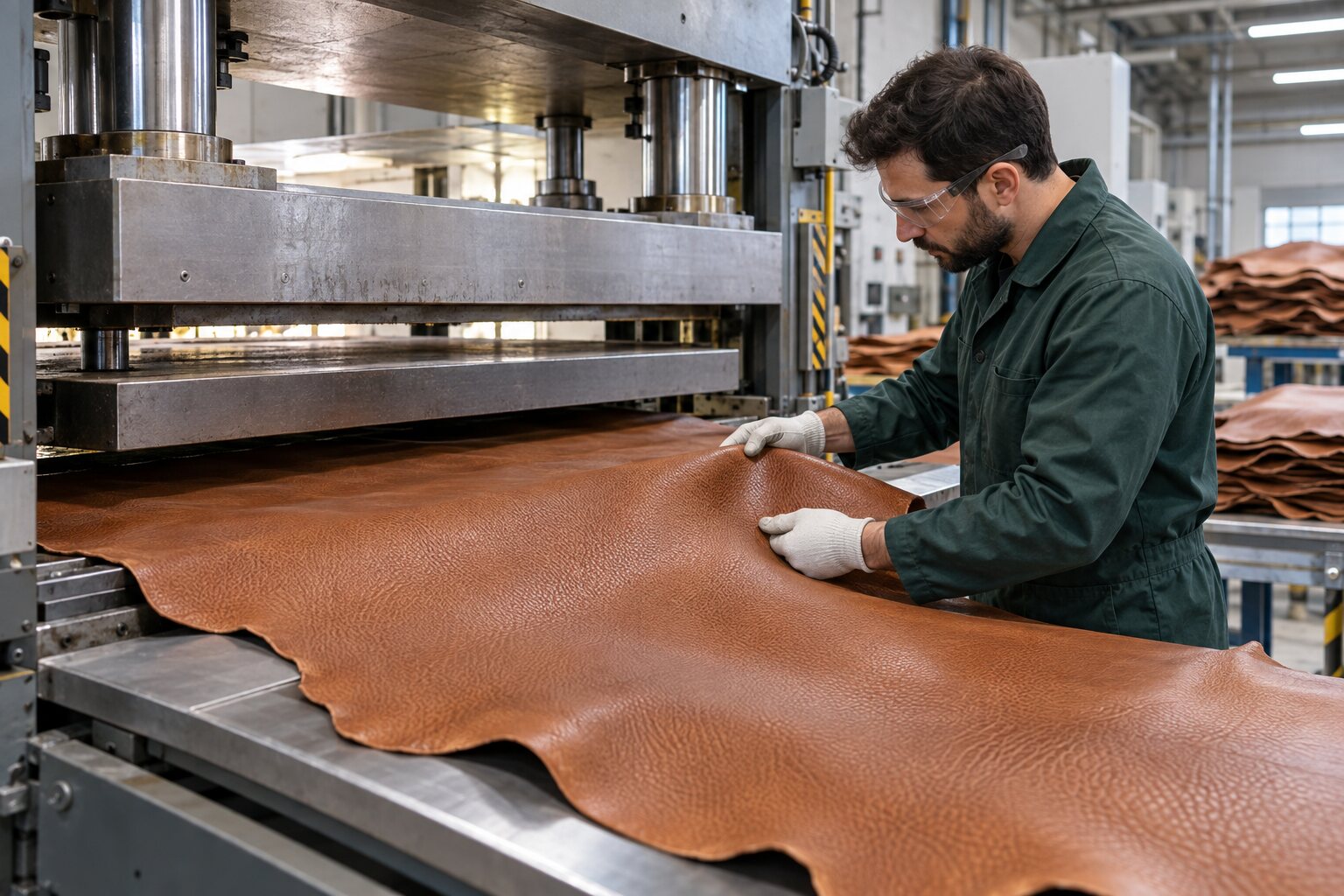
There is no universal answer. Vegetable-tanned leather may show woody or tannin-like notes, while chrome-tanned leather is often more neutral. Retanning, dyes, oils, washing and topcoats can outweigh the primary tanning system. “Vegetable” and “chrome” are not stand-alone measures of quality, authenticity or safety.
Fatliquors give leather softness and flexibility. Unsuitable or poorly stabilized oils can oxidize during warm storage or shipping and create stale-oil, fatty or rancid notes. The odor may develop after production, especially inside sealed packaging.
Delayed curing, inadequate preservation or microbial activity in raw hide can produce odor precursors and later defects. Industrial control of time, temperature, washing and drying is essential to prevent these compounds from remaining in the finished leather.
A damp-basement or mold odor—especially with white or green growth, staining, discoloration or a wet surface—calls for immediate inspection. Isolate the item, move it to a dry and ventilated area, and avoid perfume, bleach or aggressive heating. Visible contamination should be assessed by a specialist.

Not necessarily—and no smell does not guarantee safety. Restricted substances such as chromium(VI), formaldehyde and certain aromatic amines released from azo colorants must be measured. ISO 17075‑1, ISO 17226‑1 and ISO 17234‑1 cover these chemical tests. REACH also restricts chromium(VI) in leather parts that have direct and prolonged skin contact.
No. Added fragrances can imitate leather, while some genuine leathers become nearly odorless after finishing and ventilation. A better assessment combines surface and back structure, flex behavior, technical specifications, traceability and—when needed—laboratory analysis.
Adhesives, soles, foams, linings, inks and packaging can all emit odor. Components should be assessed separately before blaming the leather; otherwise quality-control teams may investigate the wrong process.
| Observation | Possible meaning | Recommended action |
|---|---|---|
| Mild leather scent | Tanning, oils and finish | Ventilate and review specifications |
| Rancid or stale-oil odor | Fatliquor oxidation | Check batch and shipping conditions |
| Musty or mold odor | High humidity or fungal growth | Isolate, dry carefully and inspect |
| Sharp solvent/glue odor | Finish, adhesive or non-leather component | Ventilate; test VOCs if persistent |
No. Odor intensity depends on process, age, topcoat, packaging and ventilation.
No. A strong odor may come from oil, solvent, adhesive or poor storage.
Place the item in a dry, shaded and ventilated space. Avoid perfume, alcohol, bleach and intense heat.
Leather odor is a clue, not a verdict. Producers should control raw material, washing, fatliquoring, drying, packaging and storage. Buyers should evaluate unusual odor together with appearance, storage history and test documentation. For sourcing and quality-control questions, contact Dalir Leather Industry.
Editorial note: this educational article does not replace testing of a specific product or production batch.