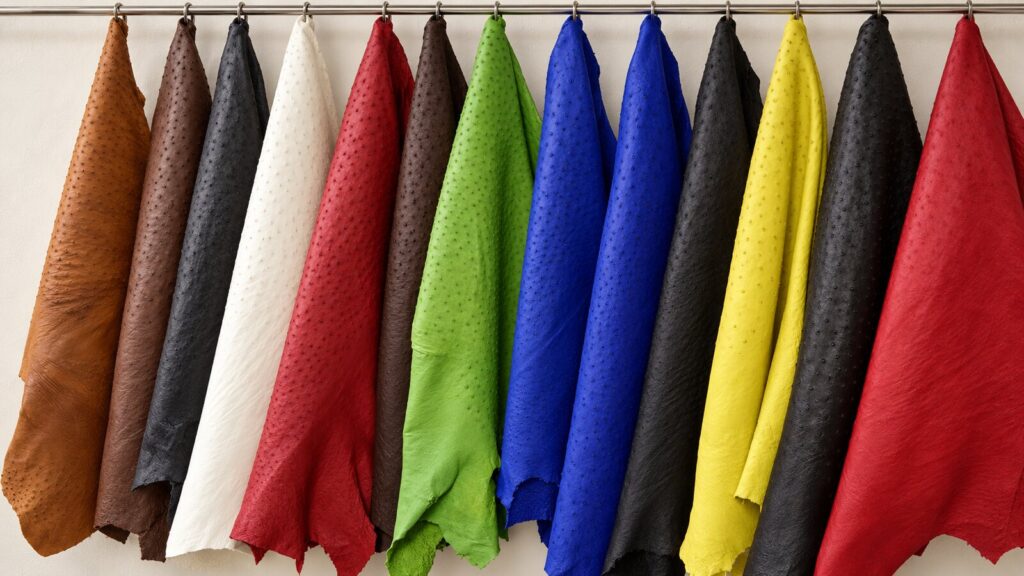
Ostrich leather is one of the most distinctive natural leathers used in luxury products. Its recognizable quill pattern, comfortable handle and versatility make it suitable for bags, footwear, belts, wallets, watch straps, garments and decorative details. However, visible quill marks alone do not guarantee high quality.
Professional buyers should evaluate authenticity, grain condition, tanning and finishing quality, thickness consistency, color uniformity and the usable cutting area of every skin. This guide explains the most important checks to make before selecting ostrich leather for production or placing a wholesale order.
The best-known feature of genuine ostrich leather is the pattern created by feather follicles. The most prominent quill marks are normally concentrated in the central crown area of the skin. Their size, spacing and shape should look natural and slightly irregular.
A perfectly repeated pattern or identical marks across the entire surface may indicate an embossed imitation. Genuine skins do not have the same quill density everywhere. The crown has a stronger pattern, while the outer areas are generally smoother. This natural variation gives every skin its individual character.
High-quality leather should have a natural, responsive surface rather than a heavy plastic appearance. Look closely for fine cracks, peeling finish, damage around the quill follicles or areas where the coating separates from the grain.
Inspect the skin under light from different angles. Some variation is normal in natural leather, but the surface should not contain dry, burnt, brittle or unstable areas. An excessively heavy coating may hide defects while reducing the natural character of the leather.
The required handle depends on the final product. Suitable ostrich leather should flex without cracking or developing severe white stress lines, and it should recover naturally after bending.
Extra softness is not automatically better. A soft bag requires a different handle from a structured handbag, belt or footwear component. Buyers should define the expected softness, body and dimensional stability before production.
Measure thickness at several points instead of relying on one corner of the skin. Large variations may create difficulties during cutting, skiving, stitching, bonding and edge finishing.
For delicate products, consistent thickness and controlled skiving are especially important. For components exposed to more stress, suitable substance and strength become a higher priority. A written thickness range helps the tannery prepare leather for the intended application.
Color should be reasonably consistent across each skin and among the skins supplied in the same batch. Always examine leather in appropriate light and compare more than one piece. Minor variation is expected in a natural material, but strong patchiness, color migration or an unstable coating can cause production problems.
The required finish should also be specified, such as matte, semi-gloss, gloss, natural or special-effect. Depending on the final product, buyers may need to consider dry and wet rub fastness, finish adhesion and resistance to flexing.
Leather grading should not be based only on the total number of defects. Their location matters. A small defect in the central crown may reduce cutting value more than several imperfections close to the edges.
For accurate costing, estimate how many usable components can actually be cut from each skin. A larger or more attractive skin can sometimes provide less usable area than a smaller but cleaner one. The cutting pattern of the final product should therefore be considered during grading.
Do not evaluate only the grain side. The flesh side should be reasonably clean and even, without excessively long fibres or loose areas. Its condition affects bonding, lining and the appearance of finished edges.
When the product will be made without a lining, the quality and appearance of the flesh side become even more important.
Before placing a wholesale order, provide written requirements for color, thickness range, finish, softness, application, grade and approximate quantity. For export orders or products intended for regulated markets, the buyer and supplier should also agree on any tests required for the final application.
A small color swatch is useful for initial approval, but it cannot show the full quill distribution, defect position or cutting yield. A complete skin or representative production sample gives a more reliable basis for approval.
Ostrich leather is used for luxury handbags, footwear, belts, watch straps, wallets, garments and decorative panels. Thickness, softness and finish should always match the final application. Leather prepared for a soft bag may not be the best choice for footwear or a structured belt.
Direct communication with a tannery makes it easier to coordinate color, thickness, finish, grading and repeatability. For professional buyers, consistency from one batch to the next is as important as the appearance of a single showroom sample.
Dalir Leather Industry can review sample and specification requests before an order so that the selected leather is better aligned with the intended product.
Do more quill marks always mean higher quality?
No. Quill density and appearance are important, but grain condition, tanning quality, color, thickness and usable cutting area must also be evaluated.
Is slight color variation a defect?
Limited variation may be natural. The acceptable tolerance should be agreed according to the product and the approved reference sample.
Is a small swatch enough for a wholesale order?
A swatch is helpful for initial color and finish review. A complete skin or representative production sample provides more information about natural pattern, defects and usable area.
To request a sample or discuss leather specifications, send Dalir Leather Industry your required color, thickness, finish, intended application and approximate order quantity.
Create a buyer account to request samples, review technical specifications, and receive a quotation.